Access Without Authority: The Structural Failure of US Backchannel Diplomacy with Russia
Backchannels can open doors at the highest level, but without exclusive control and enforcement of discipline over allies and bureaucracies, access collapses into diluted consensus and failure.

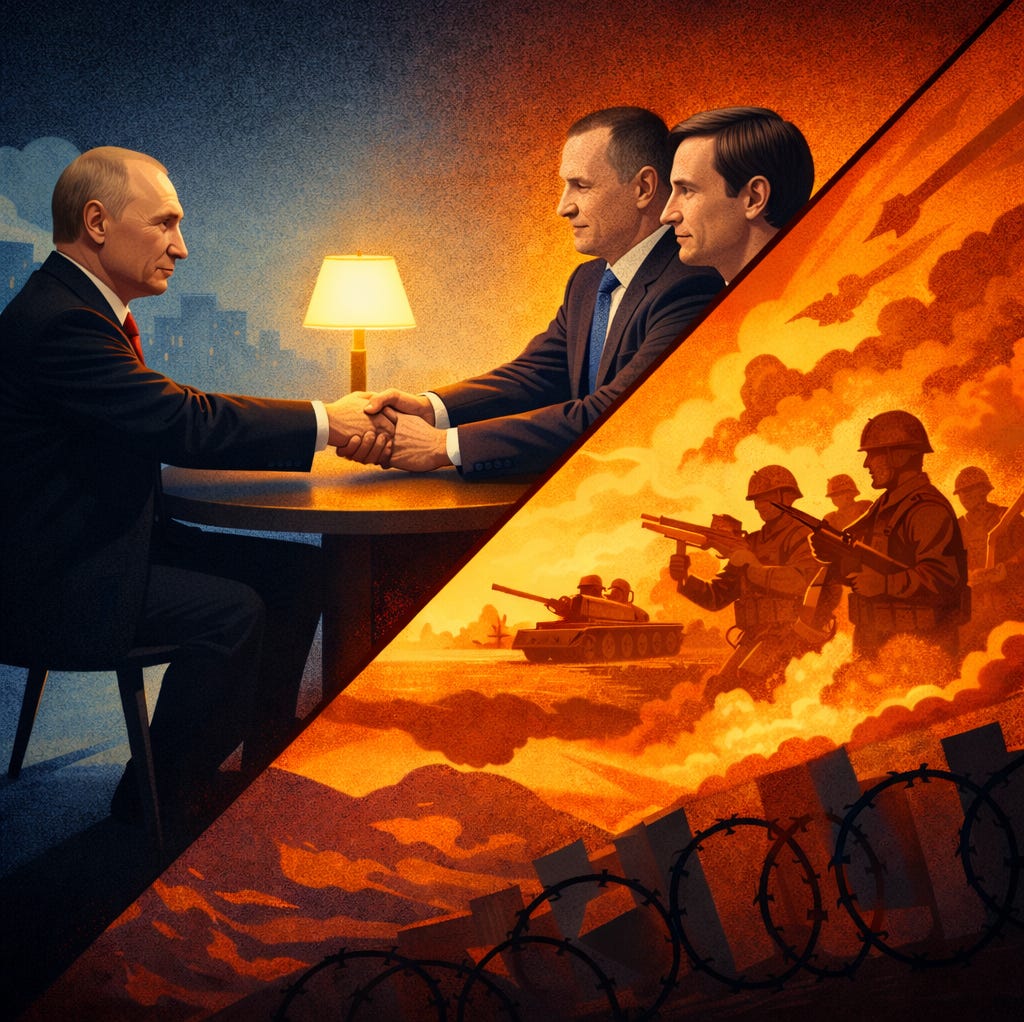
Great power diplomacy has seldom been confined to the formal rituals of foreign ministries. At moments of systemic crisis or strategic transition, heads of state have repeatedly bypassed established bureaucratic channels and relied instead on trusted personal envoys to test intentions, explore compromises and define the outer boundaries of what peace or cooperation might look like. These backchannels do not replace diplomacy, they precede it. Their function is not to draft agreements but to construct the strategic framework within which agreements might later become possible.
The Trump Administration’s use of Steve Witkoff and Jared Kushner to engage Russia, principally through direct and extended meetings with President Vladimir Putin, fits squarely within this historical tradition in form. In substance, however, the effort has thus far exposed the severe limits of personal diplomacy when it is not paired with downstream enforcement discipline and authoritative process control. The Trump backchannel has collided with a fragmented Western alliance in which Ukraine and key European states actively seek to wreck any US–Russia settlement that would impose unwelcome strategic consequences. It has also collided with the Administration’s failure to confront those actors, as well as hardliners in the US Congress and the bureaucracy, and impose discipline.
To understand why access has not translated into authority, it is necessary to revisit the historical cases in which backchannel diplomacy worked as intended. Those precedents clarify the conditions under which personal envoys can define negotiating parameters, bind their own side and convert leader-level understandings into durable political outcomes. Those conditions are conspicuously absent today.
Historical Precedents: How Backchannels Actually Work
Harry Hopkins and Franklin Roosevelt: Trust-Building Under Existential Conditions
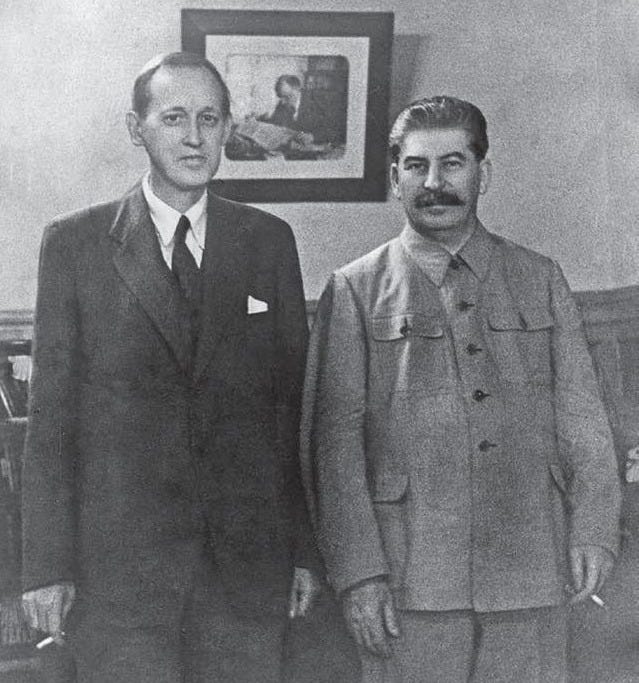
President Franklin Roosevelt’s reliance on Harry Hopkins during the Second World War offers a classic illustration of backchannel diplomacy functioning as intended. Hopkins was not a diplomat in the conventional sense. He was Roosevelt’s closest confidant, crisis administrator and political alter ego. When Roosevelt dispatched Hopkins to Moscow in July 1941, only weeks after Nazi Germany invaded the Soviet Union, he did so explicitly as a personal representative rather than as an emissary of the State Department.
At the Kremlin on July 30, 1941, Hopkins opened by stating plainly that he spoke directly as the President’s voice, that Roosevelt regarded Hitler as “the enemy of mankind”1 and that the President wished to aid the USSR. That mattered because Stalin’s baseline assumption was that Western promises were elastic and reversible. Hopkins’ role was to make the message binding in Stalin’s mind, not “the State Department’s view”, not “London’s talking points”, but the US president’s strategic intention.
Hopkins’ mission was not to negotiate detailed terms but to establish trust at the highest political level and determine whether Stalin believed Roosevelt was serious about cooperation. He conveyed the United States’ commitment to defeating Hitler and reassured Stalin that material support would follow. That exchange helped lay the political foundation for Lend-Lease and the wartime alliance.
The international environment in which Hopkins operated was decisive. Total war imposed discipline. The overriding strategic objective - the defeat of Nazi Germany - left little room for spoiler behavior. There was no viable coalition for the Soviet Union outside cooperation with Britain and the United States, and no realistic scenario in which Washington or London could sabotage that cooperation without courting catastrophe. Moreover, Roosevelt did not face an ideologically hostile national security bureaucracy. The American state was mobilizing for war and Hopkins’ role was to accelerate presidential intent through a massive administrative apparatus, not to overcome entrenched resistance to the strategy itself. His effectiveness derived from absolute credibility, crisis management competence and political intuition under extreme pressure. He did not merely trust. He translated it into execution.
Crucially, that credibility was reinforced by delivery. Hopkins returned from Moscow with concrete assessments of Soviet needs that fed directly into US decision-making. He remained embedded at the center of Roosevelt’s wartime machinery, where he could influence the allocation and prioritization of Lend-Lease aid. This meant that assurances given in the Kremlin rapidly became material support on the battlefield.
Hopkins also provided continuity across crises and conferences, ensuring that commitments survived friction, delays and allied mistrust. In this sense, trust was not sentimental or symbolic. It was operational, sustained by Hopkins’ proximity to presidential authority and his capacity to convert political intent into action. It was an attribute that proved decisive in stabilizing US-Soviet cooperation despite underlying suspicion between Roosevelt and Stalin.
Henry Kissinger and Richard Nixon: Strategic Geometry and Process Control
A generation later, Henry Kissinger’s role for President Richard Nixon exemplified a different but equally instructive model of backchannel diplomacy. Kissinger’s secret trip to China in July 1971 to meet Mao Zedong and Zhou Enlai was not designed to normalize relations overnight. It was an exercise in defining the framework of possible outcomes itself. What could be said about Taiwan? How would recognition be sequenced? How would Beijing and Washington manage their shared hostility toward the Soviet Union? Only after this conceptual architecture was clarified did Nixon proceed to public diplomacy and summitry.
Unlike the era of Hopkins, the international environment Kissinger confronted was not one of existential unity but of strategic fragmentation. The Cold War was entering a phase of triangular strategic geometry, shaped by the Sino-Soviet split and the Vietnam War. Moreover, US allies had little direct veto power over a bilateral US-China realignment. Nixon and Kissinger managed the bureaucracy accordingly. They deliberately insulated the China channel from the State Department through secrecy, compartmentation and tightly controlled readouts, understanding that premature bureaucratic pluralism would dilute or kill the initiative.2 Kissinger’s distinctive craft lay not only in negotiation but institutional engineering. He fused strategic theory, historical sensibility and process control to translate leader intuition into pathways that could eventually be formalized.
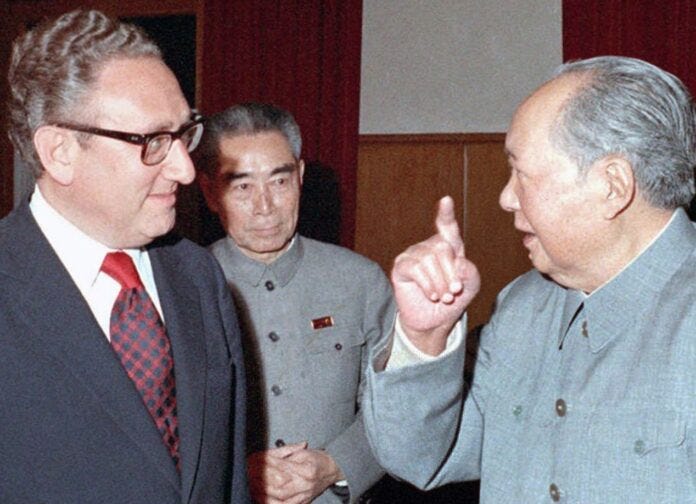
Finally, he reinforced trust by reducing Chinese fears of being traded away in US-Soviet détente, emphasizing predictability and controlled sequencing. In this sense, Kissinger translated trust into execution by building a secret, executive channel, locking in summit commitments, crafting durable language on irreconcilable issues like Taiwan and docking the result into a strategic realignment that could survive domestic and bureaucratic constraints.
Trump’s Backchannel with Russia: Familiar Form, Extraordinary Access, Hostile Terrain
Trump’s backchannel with Russia follows the same underlying logic as these precedents. By deploying Witkoff and Kushner, Trump sought to bypass hostile bureaucracies, test intentions at the highest level and sketch a settlement framework before subjecting it to formal negotiation.
What distinguishes this effort is the level of access that Russia has provided. Witkoff and Kushner met President Putin directly on December 2, 2025, and spent approximately five hours in closed-door discussions. Prior to that Witkoff, as Trump’s Special Envoy for Ukraine peace, traveled to Moscow at least five times since January 2025 and conducted multiple preparatory meetings with Putin and his advisors that laid the groundwork for the Anchorage meeting in August 2025. This was not symbolic engagement but sustained leader-level contact of the kind that defined the Hopkins and Kissinger precedents. Russia’s willingness to engage through direct presidential contact signals that Moscow understood the channel as serious, authoritative and exploratory at the highest level.
Substantively, the discussions have revolved around the familiar pillars of territorial realities, Ukrainian neutrality and sanctions sequencing among other points of contention. The blockage that followed, therefore, cannot be attributed to a lack of access, seriousness or clarity between Washington and Moscow. Kushner and Witkoff are fully aware that Moscow’s core demands have remained unchanged since the start of the Special Military Operation. The credibility problem has emerged in Washington’s approach to alliance management and in the behavior of Ukraine, Europe and hardline elements within Trump’s own Administration.
On December 14-15, 2025, Kushner and Witkoff met Volodymyr Zelensky of Ukraine and senior European leaders in Berlin. During those meetings, European and Ukrainian input was formally incorporated into what had initially been a US-drafted 28-point framework, producing a 20-point plan. The revision did not merely streamline the proposal, it diluted its core elements, stripping or softening provisions directly related to neutrality, territorial realities and sanctions sequencing - precisely the issues that Russia regards as non-negotiable.
From a process standpoint, this was decisive. By incorporating European and Ukrainian revisions at the exploratory stage, despite knowing these revisions contradicted Russian requirements, Witkoff and Kushner effectively transformed a backchannel framework into a negotiated coalition document before it had ever been tested with Moscow as a final concept. In doing so, the channel ceased to function as a presidential instrument for defining the settlement parameters and became instead a vehicle for alliance compromise.
For Russia, this sequence is fatal to confidence. It signals not flexibility but reversibility - that understandings reached at the leader level of two great powers can be re-written downstream by actors whose interests are structurally opposed to settlement.
This loss of credibility is not accidental but structural. It follows directly from the abandonment of channel exclusivity and the substitution of parallel diplomacy for disciplined sequencing. The implications of that shift are best understood by contrasting the logic of exclusive backchannels with the realities of coalition-driven negotiations.
Exclusive Channels and Coalition Discipline: What Parallel Diplomacy Reveals
A further and decisive distinction between the Hopkins–Kissinger model and the Kushner–Witkoff approach lies in the scope and discipline of interlocutors. Hopkins and Kissinger operated through strictly controlled channels that connected the US president directly to the highest authority in the counterparty state. Hopkins spoke exclusively to Stalin as Roosevelt’s personal representative, while Kissinger dealt only with Mao and Zhou through a secret and insulated channel. This discipline was deliberate. By limiting interlocutors to top decision-makers, both envoys minimized veto players during the exploratory phase and deferred alliance and bureaucratic management until after the strategic framework had been defined at the presidential level.
By contrast, Witkoff and Kushner have maintained neither horizontal nor vertical exclusivity. In parallel with their engagement with Putin, they have conducted extensive consultations with Zelensky and European leaders, while also negotiating across multiple levels of government. This has included meetings with Ukrainian officials such as Rustem Umerov and Andriy Hnatov in Miami on December 4-5, 2025, as well as separate engagements with Kirill Dmitriev later that month. The result is a diffusion of authority where presidential intent is no longer conveyed through a single leader-to-leader channel but diluted across multiple tiers and constituencies. This erosion of exclusivity weakens the signal of commitment, blurs lines of decision-making and ultimately undermines the credibility of the backchannel as a presidential instrument capable of binding outcomes.
These differences are not merely stylistic. They are analytically revealing and point to a deeper structural problem within the Western coalition.
First, parallel diplomacy indicates that the United States is no longer acting as a unitary actor in the realist sense. Hopkins and Kissinger could credibly explore agreements because the presidents they served retained sufficient authority to treat implementation as a downstream problem. Trust was built first with the counterparty leaders and discipline was imposed later on allies and institutions. By contrast, the need for Kushner and Witkoff to negotiate simultaneously with Moscow and with allied and proxy actors suggests that the US executive cannot assume compliance after the fact. Implementation must therefore be bargained in advance because enforcement authority is uncertain.
Second, this pattern reveals that Europe and Ukraine have acquired effective veto power over US strategy. They are no longer merely stakeholders to be managed after decisions are made but actors whose resistance can derail the process itself. This veto power does not derive from independent material capability, but from their embeddedness within US domestic politics and bureaucracy. European governments are deeply networked into the US Congress, the national security bureaucracy and the media ecosystem. As a result, they can contest presidential initiatives indirectly, even when they lack autonomous enforcement power. Trump’s need for constant consultation with the Europeans and Ukrainians reflects not coalition harmony, but contested authority.
Third, the use of parallel channels transforms “Western unity” from an outcome of diplomacy into a precondition for it. In the Hopkins and Kissinger cases, unity was imposed after strategic decisions had been made at the highest level and then enforced downward through disciplined processes. In the current case, unity is treated as something that must be negotiated in advance, not only with European and Ukrainian leaders, but also through the premature involvement of US institutions such as the State Department and allied foreign ministries. This reversal of sequence is consequential. It allows European and Ukrainian elites, whose political survival depends on prolongation of the conflict, as well as sympathetic bureaucratic actors within the US system, to shape, dilute or block peace efforts during the exploratory phase itself. In practical terms, alliance management and bureaucratic coordination become an internal veto mechanism.
This dynamic has been visible in practice. Up to the Anchorage Trump–Putin meeting in August 2025, the backchannel appeared to function as intended because Witkoff operated with relative exclusivity, preserving insulation and momentum. That logic nearly extended to a follow-on summit in Budapest facilitated by Prime Minister Viktor Orbán. The effort collapsed, however, once foreign ministers were drawn into the process, specifically after a call between Marco Rubio and Sergey Lavrov, underscoring how early bureaucratic reentry, led by a Russia hardliner like Rubio, likely derailed a backchannel that might otherwise have progressed toward a second leader summit.
Fourth, this pattern has predictable effects on credibility toward Moscow. From a Russian perspective, parallel consultations signal that Washington cannot bind its own camp. Any proposal advanced by US envoys appears provisional and subject to later renegotiation under allied pressure. Under such conditions, Russian incentives shift decisively toward waiting and fighting rather than compromising. Battlefield leverage becomes more reliable than diplomatic assurances when the latter are perceived as reversible.
Finally, the parallel approach suggests that Trump is negotiating on two fronts simultaneously - with Russia and with his own coalition. Hopkins and Kissinger deliberately avoided this trap. They insulated the exploratory phase precisely to prevent spoilers from collapsing the process before it matured into an enforceable commitment. The inability or unwillingness of Witkoff and Kushner to maintain similar exclusivity underscores the depth of fragmentation within the Western camp. The coalition is not merely divided in preferences; it is divided in authority.
Counterfactual: What a Kissinger-like Channel Would Have Required Today
The collapse of credibility in the current process invites a counterfactual comparison: what institutional architecture would have been required for a Kissinger-like channel today to convert extraordinary access into enforceable outcomes rather than coalition compromise?
First, such a channel would have required strict exclusivity and compartmentation at the exploratory stage. Kissinger’s defining move in 1971 was not improved messaging but insulation in the form of a small circle, controlled readouts and a negotiation track protected from interagency and allied interference until summit deliverables were secured. A 2025-26 analogue would mean that European and Ukrainian inputs could not be permitted to rewrite the framework during discovery. Consultation would occur only after US–Russia parameters had been defined, not before.
Second, it would have required process supremacy inside the US government. Kissinger could speak credibly because he controlled the National Security Council machinery and could prevent bureaucratic dilution. By contrast, Marco Rubio, who combines the roles of Secretary of State and National Security Advisor, lacks both Kissinger’s authority and his standing as a strategic broker, while his prior hostility toward Russia further weakens his credibility. This concentration of roles blocks effective bureaucratic discipline.
Moreover, neither Kushner nor Witkoff commands the interagency leverage necessary to translate presidential intent into execution. A 2025-26 version would require a White House–led mechanism capable of overriding resistant departments and agencies, controlling information flow and preventing Congress–bureaucracy–allied networks from collapsing the channel through leaks or procedural sabotage. Without such internal command authority, access to Putin would remain strategically insufficient because deliverability could not be assured.
Third, it would have required an ambiguity formula robust enough to survive veto politics. Kissinger’s breakthrough depended on language that allowed both sides to move without identical legal commitments. The classic example is the Taiwan formulation in the 1972 Shanghai Communiqué where the United States stated that it
“acknowledges that all Chinese on either side of the Taiwan Strait maintain there is but one China and that Taiwan is a part of China”3
while affirming only that it “does not challenge that position”. This carefully calibrated phasing allowed Beijing to claim US recognition of the One China principle, while Washington avoided formal legal recognition or an explicit abandonment of Taiwan. This permitted strategic realignment without forcing either side to concede its domestic red lines. Ambiguity here was not a flaw but a stabilizing device. It created de facto alignment without requiring de jure convergence.
A 2025-26 equivalent would require carefully structured formulations on neutrality, security guarantees and territorial administration that create de facto constraints without demanding immediate maximal recognition. Crucially, as with Kissinger’s model, such ambiguity would only be credible if paired with enforcement such as conditionality on US financial and security support and a credible threat of reconfiguration in response to defection by downstream actors - whether Ukraine itself, European states that seek to negate the settlement through unilateral action, or US domestic institutions that obstruct implementation.
Fourth, it would have required locking in an irreversible political deliverable early, analogous to Nixon’s announced visit to China, to force bureaucracies and allies to reorganize around a new reality. In 2026, this could take the form of a publicly declared summit framework with defined sequencing and an announced shift in US sustainment policy for Europe and Ukraine, tied to compliance benchmarks, raising the reputational and institutional cost of reversal. This would signal to Moscow that the channel represented presidential decision rather than exploratory theater.
Finally, a Kissinger-like channel would have required disciplined coalition management after, not during, discovery. European leaders would be confronted with a binary choice - align with the US-defined framework or absorb the consequences of reduced US financial and security underwriting. Unity would thus be enforced downstream as compliance, not negotiated upstream as consensus.
Controlling the Process: What Trump Would Have to Do to Impose a Peace
If Ukrainian resistance, European obstruction, and hardliners in Congress and the bureaucracy are constraining Trump, the question is no longer whether peace is theoretically possible but whether the President is prepared to exercise authority commensurate with his office. At present, he appears either unwilling or unable to do so, deferring to allied pressure and domestic opposition rather than confronting it. Under such conditions, diplomacy remains performative. A settlement could become possible only if enforcement replaces consensus as the organizing principle of policy, and if the White House accepts the political costs of imposing compliance rather than negotiating acquiescence.
Imposing peace would require converting US leverage into binding conditionality. This would mean confronting allied and domestic resistance directly, accepting political rupture where necessary and making clear that continued US underwriting of European security is contingent on compliance with a US-defined framework. The purpose would not be punishment but discipline - to eliminate the assumption that obstruction carries no cost.
Even then, important limits remain. A Russian military victory would not allow Moscow to dictate everything. Russia can impose facts on the ground and compel behavioral constraints, but it cannot reliably force durable constitutional change, compel immediate sanctions relief or secure universal legal recognition of territories under its control. What it can achieve is de facto acceptance over time. Any imposed peace would therefore be imperfect and contested, but preferable to a deteriorating military trajectory in which Ukraine’s position weakens and the scope for negotiated influence rapidly disappears.
Peace Delayed, Terms Hardened
Trump’s backchannel diplomacy is historically orthodox in design and unusually strong in access. Its failure to deliver peace is therefore not a problem of intent, seriousness or leader-level rapport. It is a failure of authority. The channel has stalled not because Moscow is unwilling to negotiate, but because Washington has failed to impose control over a hostile coalition at the very moment battlefield momentum is shifting leverage toward Russia.
Negotiating with actors whose strategic preferences are structurally incompatible with Russian demands does not advance peace but delays it. Moreover, delay under conditions of Russian military advantage is not neutral. It functions as a concession. Each postponement hardens Moscow’s terms, narrows diplomatic optionality and transfers decision-making from negotiating tables to the battlefield.
The choice is therefore no longer procedural but strategic. Either the United States exercises authority commensurate with its role as the war’s principal driver by imposing discipline, enforcing compliance and translating leader-level understandings into binding outcomes, or it relinquishes that role and allows the war to end on terms dictated by force. In that case, the sabotage tolerated in the name of alliance management will not preserve leverage. It will ensure that when a settlement finally arrives, it is harsher, narrower and imposed without American agency.
If you’ve enjoyed this analysis, I’d love to welcome you as a subscriber. It’s free, and you’ll get every new essay delivered directly to your inbox. No algorithms, just thoughtful writing.
Foreign Relations of the United States, “Memorandum by Mr. Harry L. Hopkins, Personal Representative of President Roosevelt”, 740.0011 European War 1939/149171/2, Conference at the Kremlin on July 30, 1941, 6:30 to 8:30 PM, Between Harry L. Hopkins and Mr. Stalin, 5 September 1941.
Foreign Relations of the United States, “Memorandum from the President’s Assistant for National Security Affairs (Kissinger) to President Nixon”, Volume E-13, Documents on China, 1969-1976, Document 9, Washington, 14 July 1971.
Foreign Relations of the United States, “203. Joint Statement Following Discussion with Leaders of the People’s Republic of China”, Volume XVII, China, 1969-1976, Document 203, Shanghai, 27 February 1972.
Exactly right.
The negotiations with Stalin and Mao were also conducted clearly by much higher calibre individuals working for far more competent Presidents than the current moron , his dumb real estate salesman buddy and his sleazy son in law.
Neither Trump nor either of his unskilled minions have the foggiest idea of the gulf which exists between a business deal and real diplomacy.
Such a low quality of leadership is to be expected in a “civilisation” in it’s decline, rapidly approaching complete decrepitude.
Putin plays with these clowns like a cat does with a mouse, prior to eating it.
A marvelous reveal of behind-the-curtains diplomacy. Thank you so much.