War Without Collapse: The Power of Shiʿa Islam, Martyrdom and the Iranian Nation
Iran’s survival in the face of war is rooted not only in military and institutional resilience, but in a civilizational identity shaped by Shiʿa Islam and the enduring power of martyrdom.

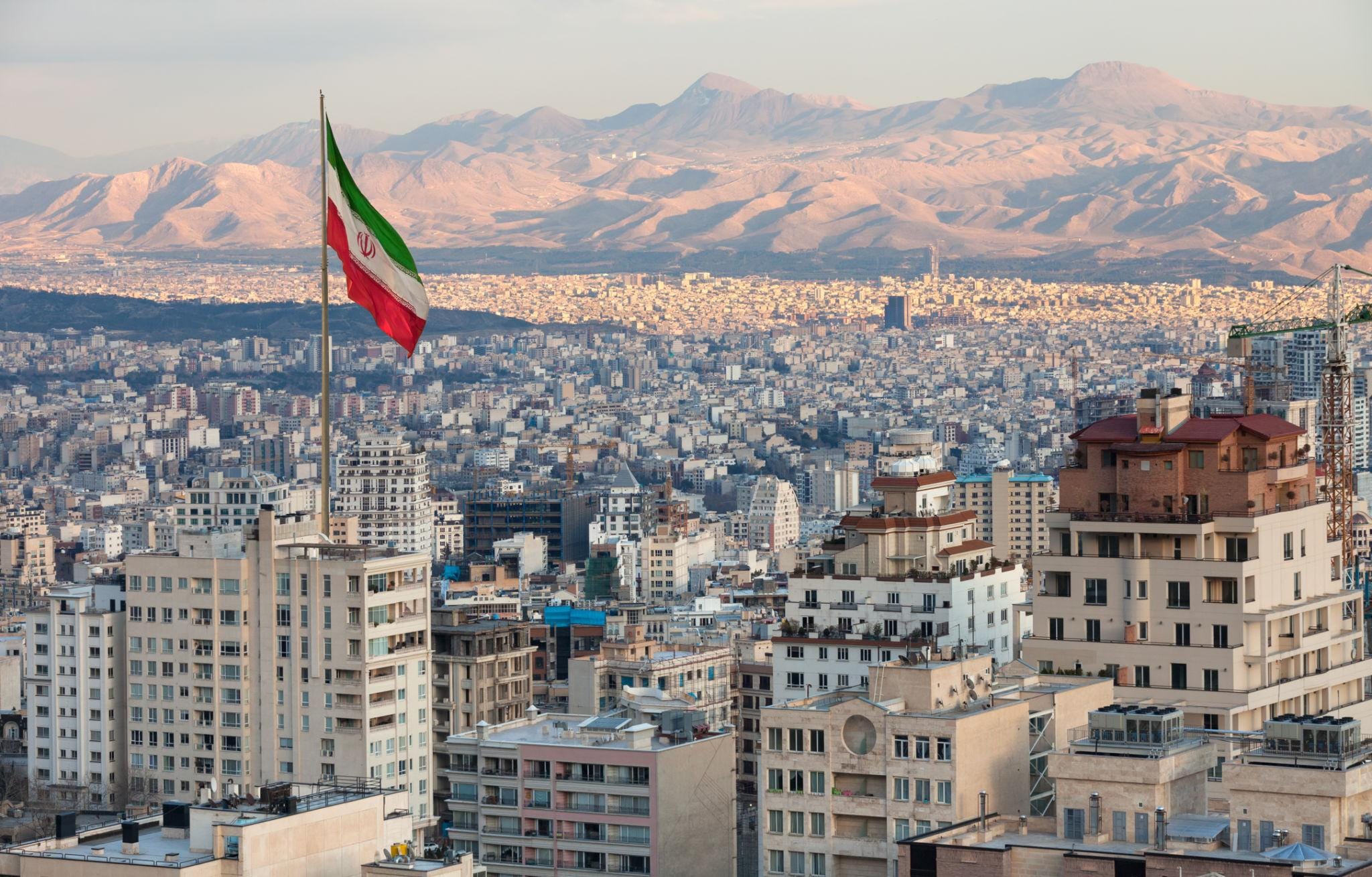
The war that erupted against Iran on February 28, 2026, is from Tehran’s perspective, an existential struggle. The American-Israeli objective has been stated explicitly: dismantle the command structure, fracture elite cohesion and accelerate political collapse of the Iranian state from above.
For Iran, the stakes are civilizational. The conflict is framed not as a contest over policy, but as a battle for sovereignty, independence and historical continuity. The memory of foreign interventions - whether in the form of the 1953 coup, support for Iraq during the 1980–1988 war, or successive sanctions regimes - shapes how the present moment is interpreted. In that historical context, the current campaign is seen not as a discrete military episode, but as the latest chapter in a long struggle over who determines Iran’s political destiny.
The cost has already been immense. Reports indicate that senior members of Iran’s political and military leadership were killed in the opening wave of strikes, notably the defense minister Amir Nasirzadeh and the head of the Islamic Revolutionary Guard Corps (IRGC) Mohammed Pakpour. Most consequential is the now confirmed death by Iranian state media of the Supreme Leader, Ayatollah Ali Khamenei. In conventional strategic logic, such decapitation is intended to disorient the state, weaken morale and trigger internal fragmentation. Leadership removal is assumed to create paralysis. US President Donald Trump, in his Truth Social post of February 28, announcing the death of Khamenei, stated that “This is the single greatest chance for the Iranian people to take back their Country.”
Yet, this assumption rests on a profound misunderstanding. Iran is not merely a modern nation-state with a centralized bureaucracy. It is also the historical heartland of Shiʿa Islam - a tradition in which the death of a leader can generate consolidation rather than collapse. The West often interprets martyrdom as tragic loss. In Shiʿa political theology, martyrdom carries an entirely different resonance. It is sanctified sacrifice. It is moral vindication. It is the ultimate testimony to righteousness in the face of tyranny. This difference in moral grammar matters enormously in wartime.
In such a framework, the killing of leaders by foreign powers does not necessarily delegitimize the political order. It can instead sacralize it. Loss becomes proof of injustice inflicted. Death becomes evidence of steadfastness. The fallen are absorbed into a sacred narrative that stretches back nearly fourteen centuries. This is the force that external strategists routinely underestimate.
To understand why this war is unlikely to break Iran as a political community, one must first understand the power of Shiʿa Islam in Persian history and the central role martyrdom has played in shaping Iranian identity. Only then does it become clear that what appears externally as decapitation may internally become consecration.
At the same time, one must caution that this religious dimension is not the only factor shaping Iran’s resilience. There are other structural factors such as elite cohesion, security control and institutional depth that matter. However, religious ideology is a force that external strategists consistently underestimate in Iran. And in wartime, it can profoundly alter how loss is processed, how legitimacy is reinforced and how political continuity is maintained.
Karbala as Political Theology
The central event of Shiʿa Islam is the martyrdom of Imam Husayn ibn Ali at the Battle of Karbala (present day Iraq) in 680 CE. In Shiʿa tradition, Husayn’s death was not a mere battlefield tragedy. It was a cosmic confrontation between justice and tyranny. His refusal to submit to illegitimate authority became the archetype of righteous resistance.
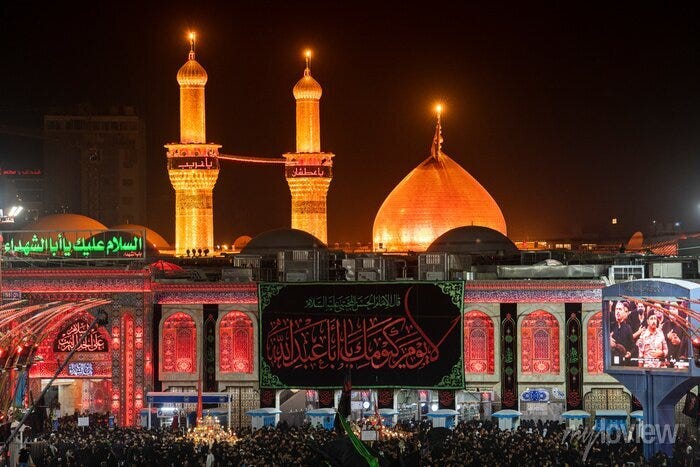
For Shiʿa communities, history is not cyclical but moral. Karbala is re-enacted ritually every year during Ashura. In Iran, millions participate in mourning processions, passion plays (taʿziyeh) and acts of collective remembrance. These rituals do not simply commemorate the past. They socialize each generation into a worldview in which suffering, sacrifice and endurance under oppression are spiritually ennobling.
This matters profoundly in wartime. A society steeped in the narrative of Karbala does not experience loss the way secular strategic theory assumes. Casualties can be framed as martyrs. Leadership decapitation can be reframed as continuity with Imam Husayn’s path. External violence can be woven into an ancient story in which injustice ultimately fails and righteousness endures. No airstrike can bomb that narrative out of existence.
The Safavid Synthesis: Shiʿism as State Identity
The decisive historical moment in which Shiʿism fused with Iranian statehood came in the early 16th century under the Safavid dynasty. Shah Ismail I declared Twelver Shiʿism (Ithnā ‘Asharīyah) the official religion of the Persian realm. This was not merely theological. It was geopolitical.
By distinguishing Iran from its Sunni Ottoman rivals, the Safavids created a religious boundary that reinforced territorial sovereignty. Shiʿism became a civilizational marker of “Iranianness.” Over time, Persian language, imperial memory and Shiʿa doctrine intertwined.
This synthesis endured dynastic change. It survived invasions, internal upheaval and imperial decline. By the modern period, Shiʿism was not simply a creed. It was a pillar of national consciousness.
Thus, when modern Iran faces foreign pressure, it does not interpret events solely in contemporary political terms. It perceives them through centuries of state-religion integration. The defense of sovereignty becomes inseparable from the defense of sacred history.
1979: Revolution as Karbala Re-enacted
The 1979 Iranian Revolution drew heavily upon Shiʿa symbolism. Ayatollah Khomeini cast opposition to the Shah not as a conventional political movement but as a re-enactment of Husayn’s stand against Yazid. Martyrdom imagery suffused revolutionary rhetoric.
During the Iran–Iraq War (1980–1988), this symbolism intensified. Young volunteers were encouraged to see the battlefield as Karbala. The fallen were not casualties. They were shuhada, or martyrs. Murals of martyrs adorned cities and funeral processions became mass political rituals reinforcing solidarity.
The war itself - launched by Saddam Hussein but supported materially by Western and regional powers - was perceived as an existential assault on the revolution. Instead of collapsing under pressure, Iran consolidated. Institutions hardened and a siege mentality deepened.
The lesson internalized by the Iranian state was clear in that external aggression does not automatically produce fragmentation. It can produce cohesion, especially when framed as sacred defense.
Martyrdom as Social Glue
Western strategic thought often assumes that targeted killing weakens adversaries by demoralizing followers. In highly secular political cultures, that assumption may hold. However, in Shiʿa political theology, martyrdom is an accelerant. When a leader like Ali Khamenei is killed, the narrative does not necessarily end. It intensifies.
This dynamic was visible after the assassination of the IRGC General Qasem Soleimani in 2020. Rather than sparking immediate regime instability, his death triggered massive funeral processions and reinforced anti-American sentiment across segments of Iranian society. Soleimani was recast as a defender of the nation and the faith. His image became ubiquitous.
When a Supreme Leader is killed by foreign powers, the symbolic resonance will be even greater. The event will be framed as proof of longstanding hostility toward Iran’s independence. The leader’s death will be sacralized, not trivialized. In such an environment, external force risks strengthening precisely what it aims to shatter.
Succession and Institutional Continuity
External observers consistently assume that Iran’s political system is personality-driven and therefore vulnerable to decapitation. In reality, the Islamic Republic has institutionalized succession mechanisms through the Assembly of Experts. The Supreme Leader’s role is embedded within a constitutional framework that anticipates mortality.
At 86, Khamenei’s age alone would have necessitated contingency planning. Iranian elites have long understood the inevitability of transition. The idea that leadership change equals systemic collapse misunderstands both the theological and institutional architecture of the state. Shiʿa doctrine, after all, developed during centuries in which the rightful Imam was believed to be in occultation. Authority structures evolved precisely because the ultimate spiritual leader was absent.
Political continuity amid leadership absence is not alien to Shiʿa thought. It is foundational to it. Indeed, following the reported killing of senior commanders, Brigadier-General Ahmad Vahidi has already been named the new IRGC commander, signaling rapid institutional continuity rather than paralysis. Iranian state media has also indicated that a new Supreme Leader will be announced shortly.
Thus, the killing of a leader in the Islamic Republic does not create a vacuum. It could instead activate pre-existing succession pathways and re-legitimize the system through ritual mourning, institutional reaffirmation and the sacralization of continuity. In a political culture shaped by Karbala, loss does not automatically produce fragmentation. It can produce consolidation.
Iranian Nationalism and Resistance
Iranian nationalism is not reducible to religion. It draws upon pre-Islamic imperial memory of the Achaemenids, Parthians, Sassanians and a deep literary tradition. However, Shiʿism became the vessel through which much of that historical memory was preserved and politicized.
When contemporary Western powers apply military pressure, they enter a historical landscape already saturated with memories of intrusion. Shiʿa martyrdom narratives fuse seamlessly with nationalist grievances. The result is not a simple regime-versus-people dichotomy. It is a layered identity in which faith, history and sovereignty overlap.
Martyrdom as Strategic Depth
In conventional military terms, strategic depth refers to geography and redundancy. In Iran’s case, there is also ideological depth. Martyrdom ideology ensures that losses do not automatically translate into demoralization. Instead, they can generate mobilization. Each fallen figure becomes part of an expanding pantheon of resistance.
This ideological depth complicates coercive strategies. Bombing may destroy assets. It may even kill leaders. However, it risks feeding the very narrative that sustains long-term defiance.
An Unbreakable Thread
Shiʿa Islam’s theology of martyrdom, fused with Persian state identity and modern revolutionary memory, forms an unbreakable thread in Iranian political culture. Leadership succession mechanisms provide institutional continuity. Ritual mourning practices convert loss into unity. Historical memory reframes external assault as validation of long-held suspicions.
No US–Israeli war would operate in a vacuum. It would unfold within this deeply sedimented context in which attempts at coercion risk reinforcing cohesion.
To assume that killing a leader or launching a massive air campaign would shatter Iran is to misunderstand the very foundations of its national identity. The power of Shiʿa Islam in Persian history has been precisely the transformation of tragedy into endurance, of death into continuity.
Empires have come and gone across the Iranian plateau. Dynasties have risen and fallen. Yet, the narrative of Karbala endures. In the end, wars test not only military capacity but civilizational depth. Iran’s depth lies not only in missiles or mountains, but in memory - and memory, especially sacred memory, is extraordinarily difficult to break.
If you’ve found this analysis valuable, please consider becoming a free or paid subscriber. Your support directly enables me to devote more time to deep research and long-form writing of this kind, free from algorithms and click-driven incentives.
References:
Arjomand, Saïd Amir, “Constitution of the Islamic Republic”, Encyclopaedia Iranica, Vol. VI, Fasc. 2, pp. 150-158, June 30, 2016.
Abdi, Marie., “Moving to a post-Khamenei era: The role of the Assembly of Experts”, Middle East Institute, January 31, 2024.
Amir-Moezzi, Mohammad Ali, “Islam in Iran vii. The Concept of Mahdi in Twelver Shi’ism”, Encyclopaedia Iranica, Vol. XIV, Fasc. 2, pp. 136-143, April 5, 2012.
The University of Chicago, “The New Battle of Karbala”, The Graphics of Revolution and War, Iranian Poster Arts.
Associated Press, “Tears from Iran’s supreme leader as massive crowds attend slain commander’s funeral”, January 6, 2020.
Wonderful essay, very well written. It's a great primer for understanding the cultural forces undergirding Iran.
Well it's not altogether surprising Americans (and Westerners) display signs of being mentally retarded in general, with years of information manipulation reducing the ability to think critically about nuances and cultural diversity.
Personally I think this conflict could go either way, in the sense while it has a low probability of ending quickly, it could happen based on previous installments. This analytical bias could also blind us to the probabilities in favor of a long conflict. The underappreciated element so far has been Iran's targeting of various other countries (UAE, Bahrain, Qatar, Kuwait, Saudi Arabia and Jordan). It's unclear whether these countries have officially entered the war, whether this will give rise to a renewal of Sunni-Shia antagonisms, all the more so because most countries in the region don't share the resilience you wrote about Iran in the event they suffer decapitation strikes.
The other unknowns are signs of new fatwahs, the canceling of the previous fatwah prohibiting the development of nuclear weapons, and in the extreme calling for a jihad.
An excellent and timely analysis. The current crisis following the assassination of Ayatollah Khamenei underscores your point: while the West often views these strikes through a purely kinetic or institutional lens, they frequently overlook the "civilizational resilience" you describe. The doctrine of martyrdom doesn't just offer a framework for grief; it probably also is a mechanism for religious mobilization that "decapitation strikes" rarely account for.